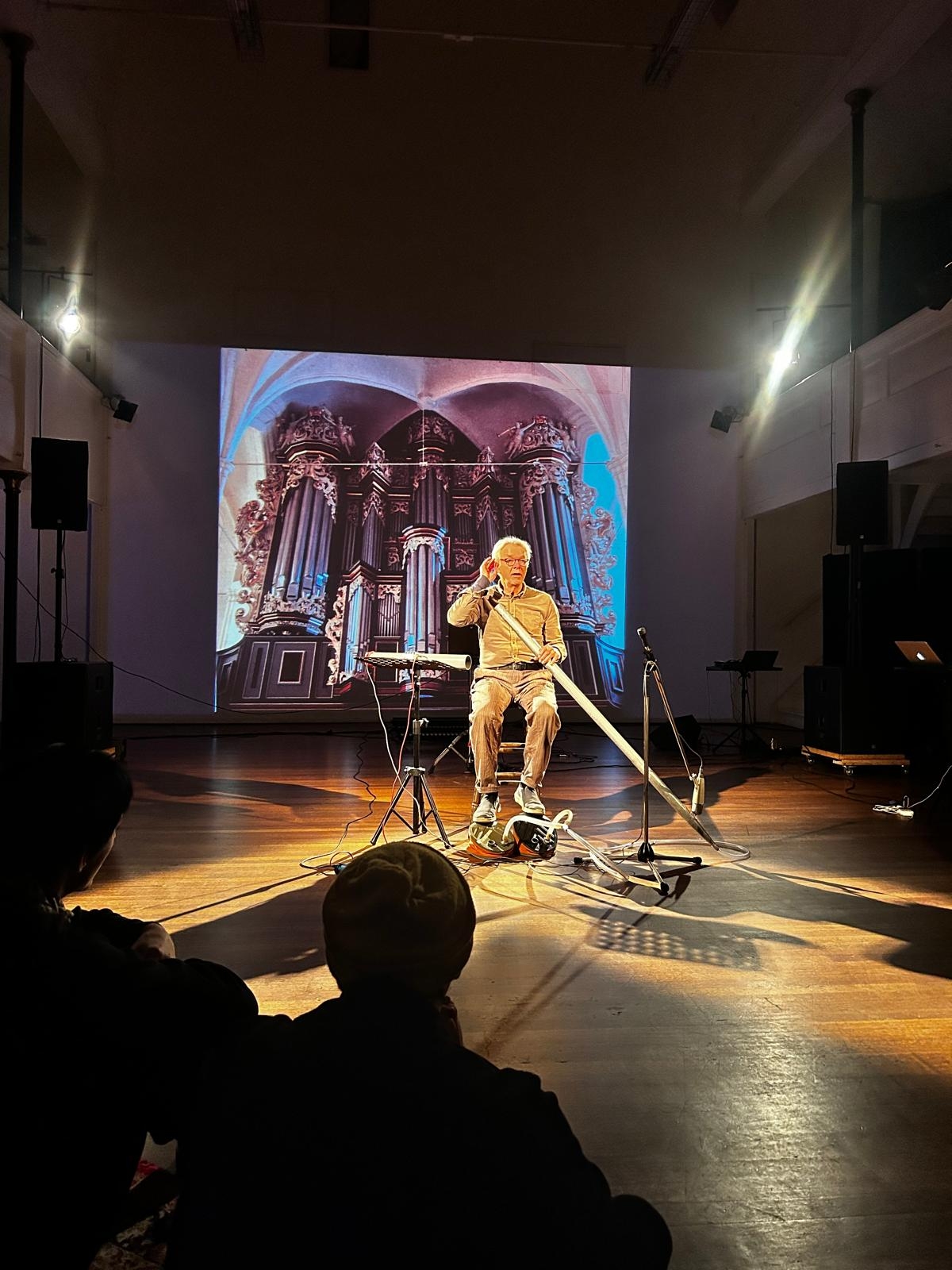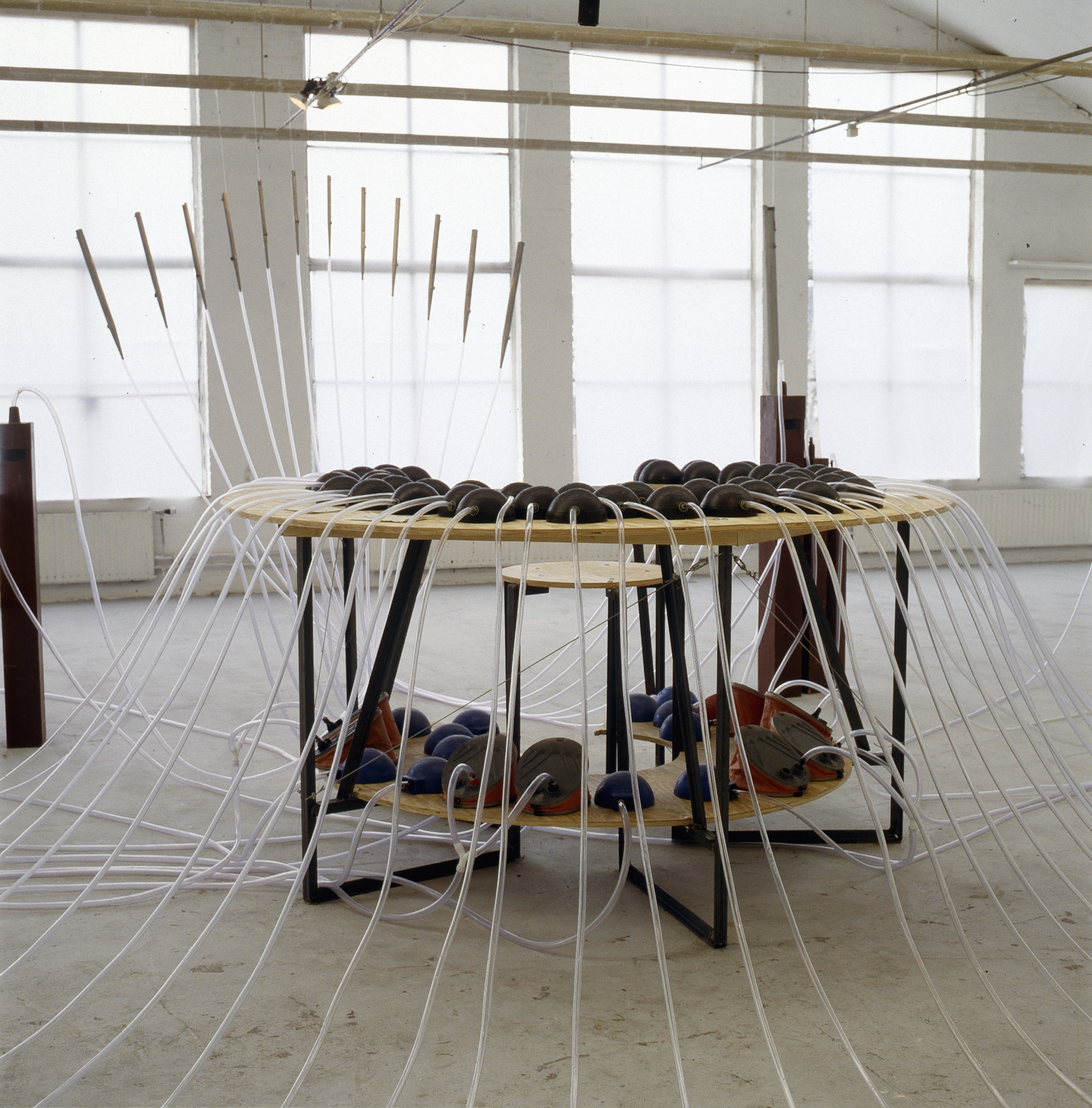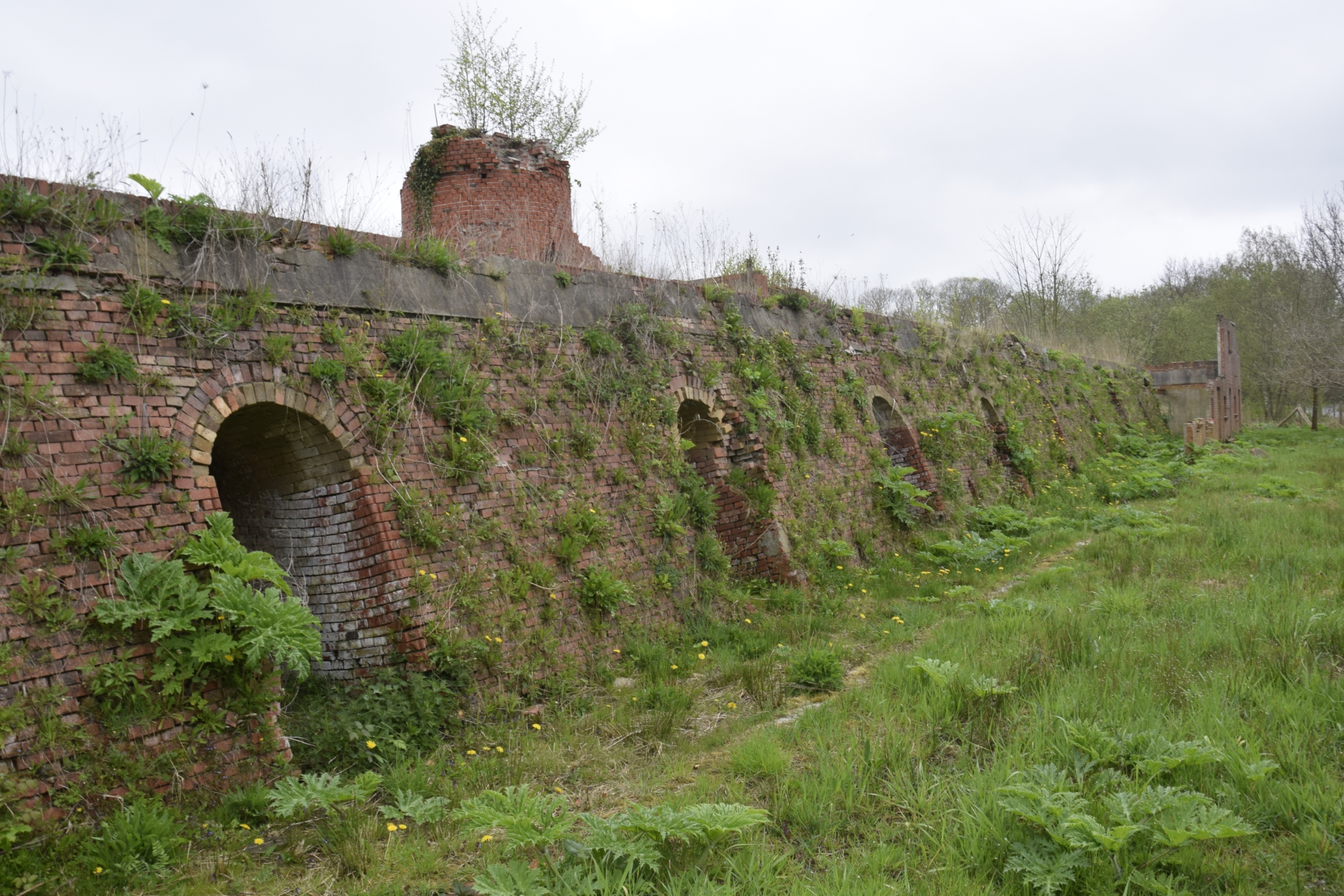

[ENG.] Horst Rickels originally studied piano construction at Grotrian-Steinway, then music in Kassel, where he started composing for the Staatstheater. He then moved to the Netherlands, where he studied electronic composition under Dick Raaijmakers at the Royal Conservatoire in The Hague and music theory with Jan van Dijk at the Brabants Conservatoire, Tilburg. Trained as a saxofone player and pianist, he participated in different bands such as The Four Winds, The Maciunas Ensemble and Der Junge Hund. At the same time, he experimented with new principles for multimedia theater, resulting in Van Gogh’s Laatste Oor or The Simulated Wood. Rickels’ main work has been developing new instruments, in the form of sound objects, sculptures and installations, incorporating the audio-visual qualities of the surrounding space, natural or artificial environments. For many of his projects, the starting points are the site-specific qualities of a space, architectonic and acoustic. Another aspect of his research is how the principle of instability of tuning-systems, pictorial structures and performance practices can be made the central theme of art works. Rickels teaches at the Royal Conservatoire in The Hague (Interfaculty ArtScience) and at the National Film and Television Academy in Amsterdam. Together with Elvira Wersche, he presented the installation/performance Godenschemering Nr. 2 at V2 in 1985. His installation Dodekafonie was part of the first Manifestion for the Unstable Media.

Gebakken Lucht / Solitude
Bilety dostępne wkrótce!
Horst Rickels - Gebakken Lucht (Baked Air) / Solitude
Horst Rickels początkowo kształcił się w zakresie budowy fortepianów w firmie Grotrian-Steinway, a następnie studiował muzykę w Kassel, gdzie zaczął komponować dla tamtejszego teatru (Staatstheater). Później przeniósł się do Holandii; w Królewskim Konserwatorium w Hadze studiował kompozycję muzyki elektronicznej pod kierunkiem Dicka Raaijmakersa, a w Konserwatorium Brabantskim w Tilburgu – teorię muzyki u Jana van Dijka. Jako saksofonista i pianista występował w różnych zespołach, takich jak The Four Winds, The Maciunas Ensemble czy Der Junge Hund. Równolegle eksperymentował z nowymi zasadami teatru multimedialnego, czego efektem były realizacje takie jak *Van Gogh’s Laatste Oor* czy *The Simulated Wood*.
Głównym obszarem działań Rickelsa jest tworzenie nowych instrumentów – w formie obiektów dźwiękowych, rzeźb i instalacji – wykorzystujących walory audiowizualne otaczającej przestrzeni oraz środowisk naturalnych lub sztucznych. Punktem wyjścia dla wielu jego projektów są specyficzne cechy danej lokalizacji (tzw. *site-specificity*), zarówno architektoniczne, jak i akustyczne. Kolejnym aspektem jego poszukiwań jest uczynienie zasady niestabilności – czy to w odniesieniu do systemów strojenia, struktur wizualnych, czy praktyk wykonawczych – głównym tematem dzieł sztuki. Rickels wykłada w Królewskim Konserwatorium w Hadze (na międzywydziałowym kierunku ArtScience) oraz w Narodowej Akademii Filmu i Telewizji w Amsterdamie. W 1985 roku, wspólnie z Elvirą Wersche, zaprezentował w ośrodku V2 instalację połączoną z performansem pod tytułem *Godenschemering Nr. 2*. Jego instalacja *Dodekafonie* była częścią pierwszej edycji wydarzenia Manifestation for the Unstable Media.