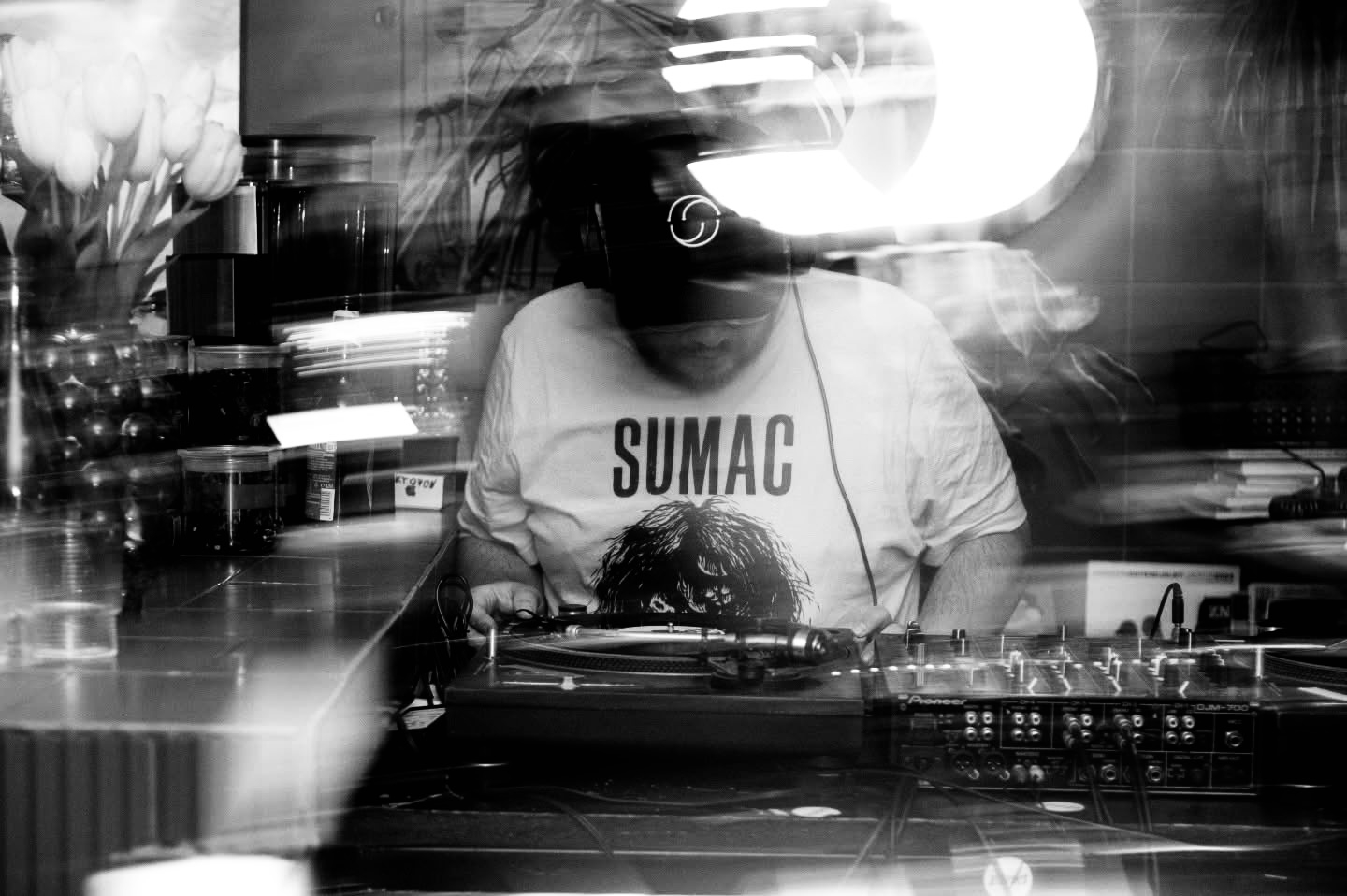
Projekt odwołuje się do tradycji wykorzystywania gramofonu jako instrumentu oraz nośnika jako aktywnego elementu procesu twórczego, obecnej zarówno w praktykach turntablistycznych i plądrofonicznych, jak i w działaniach artystów takich jak Christian Marclay, Philip Jeck czy Otomo Yoshihide. Nie jest jednak ani turntablismem, ani plądrofonią. Interesuje mnie nie cytat, dekonstrukcja czy rozpoznawalność materiału źródłowego, lecz budowanie nowych jakości poprzez nakładanie i wzajemne oddziaływanie istniejących nagrań. Powstające struktury funkcjonują jako autonomiczne kompozycje, których forma ujawnia się dopiero w czasie wykonania.
Materiał źródłowy obejmuje nagrania reprezentujące odmienne sposoby myślenia o dźwięku: od drone metalu i eksperymentalnej muzyki gitarowej (Locrian, White Static Demon, Skullflower, Horseback), przez noise, free improvisation i muzykę ekstremalną (Dead Neanderthals, Li Jianhong, P/O Massacre), po praktyki związane z muzyką elektroakustyczną, współczesną kompozycją i audio artem (Stephen O’Malley, Rafał Zapała, Paweł Kulczyński). Poszczególne nagrania zostają potraktowane jako zasób tekstur, widm, szumów, rezonansów i długich przebiegów harmonicznych. Analogowe urządzenia nie pełnią funkcji neutralnych odtwarzaczy – ich szum, niestabilność, zużycie i fizyczna materialność stają się integralnym elementem kompozycji. W rezultacie powstaje anty-set DJ-ski lokujący się na styku improwizacji, kompozycji i praktyk audio artu, w którym archiwum zapisanej muzyki staje się żywym instrumentem.
Krzysztof Pietraszewski – kurator, producent i dziennikarz muzyczny zajmujący się muzyką współczesną, eksperymentalną i sztuką dźwięku. Od 2016 roku dyrektor artystyczny festiwalu Sacrum Profanum. Współpracował m.in. z Instytutem Adama Mickiewicza, Bôłt Records, Bocian Records, Sinfoniettą Cracovią i Spółdzielnią Muzyczną. Jest autorem audycji „Muzykoteka” w Radiu Kraków Kultura oraz publikował m.in. w „Glissando” i „Gazecie Magnetofonowej”. Jego praktyka obejmuje kuratorstwo, badania nad muzyką współczesną oraz działania z pogranicza kompozycji, improwizacji i kultury fonograficznej. W proponowanym performansie rozwija zainteresowanie analogowymi nośnikami jako medium kompozycyjnym, traktując winyle i kasety jako instrument służący do tworzenia wielowarstwowych struktur dźwiękowych w czasie rzeczywistym. Jako DJ debiutował w 2026 roku na krakowskim mikro festiwalu w.punkt.
[ENG.]. Krzysztof Pietraszewski – Anti-set
I situate this proposed performance somewhere between a concert, a DJ set, and an audio art piece. The starting point is the use of analog media as compositional material rather than as carriers of finished tracks. Using two turntables and two cassette decks, I construct multi-layered sound structures in real time, drawing from two to four simultaneously playing sources. I am interested in the moment when the mix ceases to function merely as a transition between recordings and becomes a compositional tool—a means of organizing time, density, timbre, interference, and the tensions arising between overlapping materials. The project draws upon the tradition of using the turntable as an instrument and the medium itself as an active element of the creative process—a tradition found in turntablism and plunderphonics, as well as in the work of artists such as Christian Marclay, Philip Jeck, and Otomo Yoshihide. However, it is neither turntablism nor plunderphonics. My focus is not on quotation, deconstruction, or the recognizability of the source material, but rather on creating new qualities through the layering and interaction of existing recordings. The resulting structures function as autonomous compositions whose form reveals itself only during the performance. The source material comprises recordings representing diverse approaches to sound: ranging from drone metal and experimental guitar music (Locrian, White Static Demon, Skullflower, Horseback), through noise, free improvisation, and extreme music (Dead Neanderthals, Li Jianhong, P/O Massacre), to practices rooted in electroacoustic music, contemporary composition, and audio art (Stephen O’Malley, Rafał Zapała, Paweł Kulczyński). Individual recordings are treated as a resource of textures, spectra, noise, resonances, and long harmonic progressions. Analog devices do not function merely as neutral playback units; their inherent noise, instability, wear, and physical materiality become integral elements of the composition. The result is an "anti-DJ set" situated at the intersection of improvisation, composition, and audio art, in which the archive of recorded music transforms into a living instrument.
Krzysztof Pietraszewski is a curator, producer, and music journalist specializing in contemporary and experimental music as well as sound art. Since 2016, he has served as the artistic director of the Sacrum Profanum festival. He has collaborated with institutions and entities such as the Adam Mickiewicz Institute, Bôłt Records, Bocian Records, Sinfonietta Cracovia, and Spółdzielnia Muzyczna. He hosts the "Muzykoteka" program on Radio Kraków Kultura and has published articles in outlets including *Glissando* and *Gazeta Magnetofonowa*. His practice encompasses curatorial work, research into contemporary music, and activities bridging the realms of composition, improvisation, and phonographic culture. In the proposed performance, he explores an interest in analog formats as a compositional medium, treating vinyl records and cassette tapes as instruments for creating multi-layered sound structures in real time. He made his debut as a DJ in 2026 at the *w.punkt* micro-festival in Kraków.
fot. Klaudia Krupa